
Rogers Corporation, a leader in high-frequency circuit board materials, has nearly two centuries of material technology expertise, setting a strong foundation for communications, aerospace, radar, and high-speed digital systems. Leveraging Rogers’ continuous innovation in high-frequency boards, UMEC has developed a stable, mature process system for high-frequency and hybrid laminated PCB manufacturing. Through long-term collaboration, it has turned advanced material capabilities into mass-producible, deliverable engineering solutions.
Founded in 1832 and headquartered in the United States, Rogers Corporation is a globally recognized technology benchmark in high-frequency, high-speed circuit materials. Its material systems for RF, millimeter-wave, and high-speed digital applications are renowned for their stable dielectric properties, low loss, and long-term reliability. They are widely used in communications, radar, and high-end electronic systems. Around these core materials, Rogers continuously drives the application of high-frequency circuits to higher-frequency bands and more complex structures.
It was during this technological evolution that UMEC and Rogers established a long-term, stable material cooperation relationship. UMEC has been using Rogers high-frequency boards in its production for over ten years, including double-sided and multilayer high-frequency boards, as well as hybrid laminated structures that combine high-frequency and conventional materials. Through continuous process verification and mass production projects, UMEC is not only familiar with the electrical characteristics of Rogers’ main material systems but has also developed manufacturing capabilities highly compatible with the materials in drilling, lamination, impedance control, and reliability management. Simultaneously, on the supply chain side, UMEC has established a stable procurement and material preparation mechanism for special high-frequency boards, such as Rogers boards. Compared to the industry-average procurement cycle of four to five weeks for similar materials, UMEC can significantly reduce the material preparation cycle to approximately one week in most projects, providing crucial assurance of overall delivery time for high-frequency projects.
In pure high-frequency applications, UMEC uses materials such as RO3003 and RO4350B to produce double-sided and multilayer high-frequency circuit boards, focusing on controlling the impact of dielectric constant consistency, line-width and spacing tolerances, and copper surface roughness on insertion loss to ensure stable signal transmission performance across both RF and millimeter-wave bands. These products are widely used in RF modules, power amplifiers, and microwave communication units, and the corresponding manufacturing processes have been standardized and mass-produced.
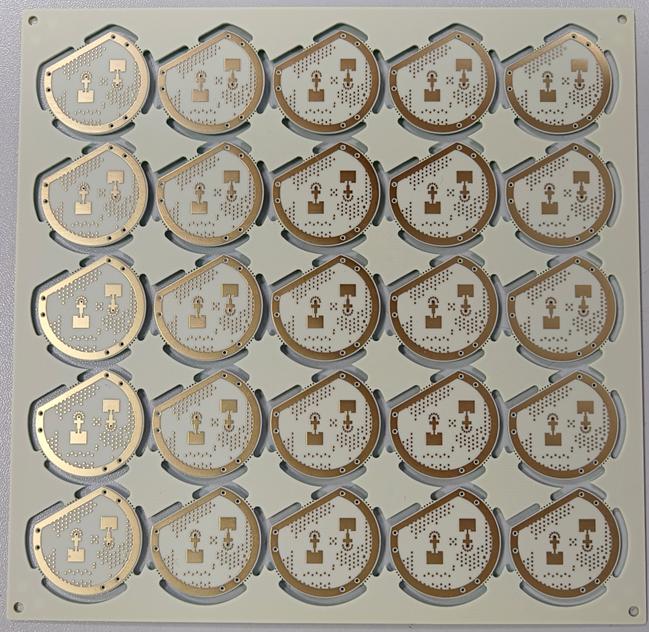
In contrast, the hybrid lamination application of Rogers materials with conventional FR-4 or TUC materials better reflects manufacturing experience and engineering capabilities. In actual projects, hybrid lamination structures are typically verified by slicing to check the interlayer bonding, resin filling, and interface quality. Related hybrid lamination slice diagrams are often used to demonstrate manufacturing consistency and process stability visually. Hybrid lamination structures are typically used to simultaneously meet RF performance and cost, structural strength, or power distribution requirements on the same PCB. The core challenges lie in differences in the coefficients of thermal expansion (CTE) of the materials, matching the lamination window, and ensuring reliable interlayer bonding.
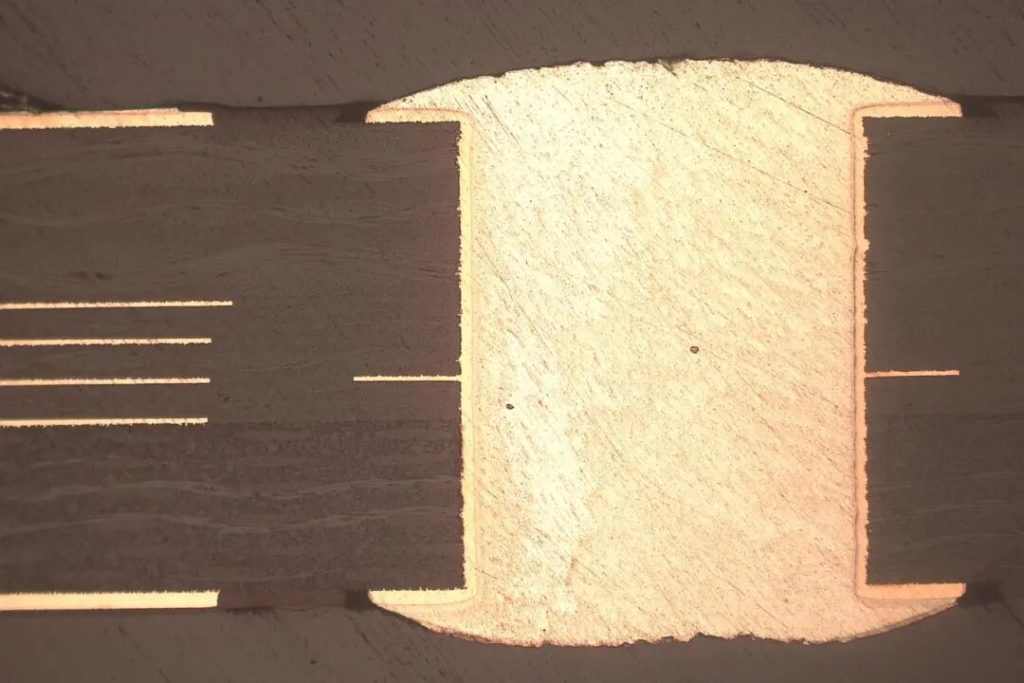
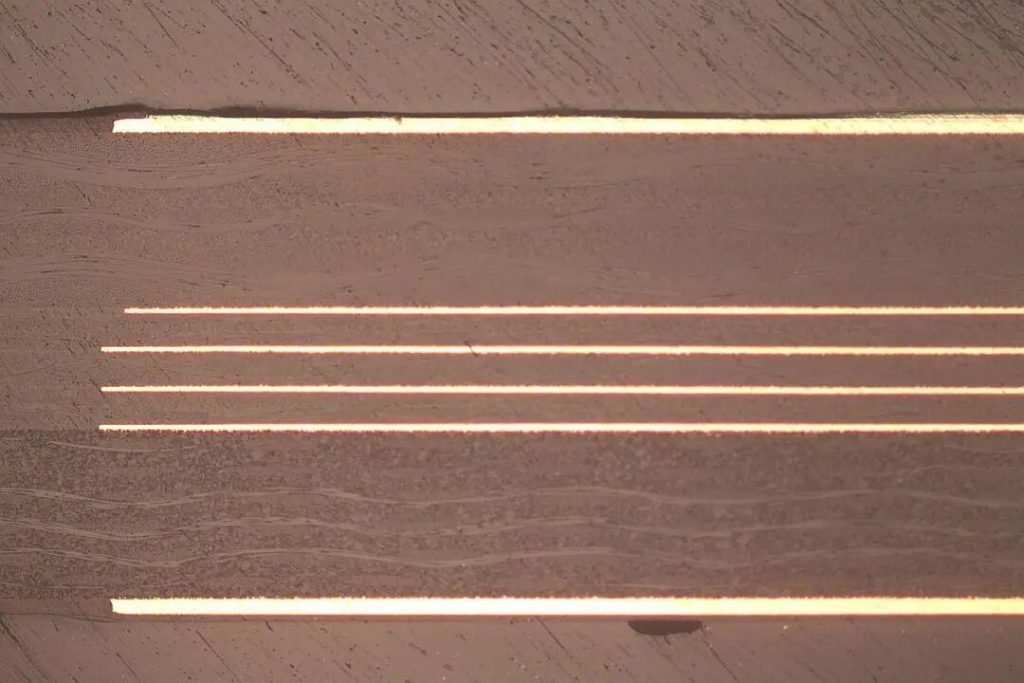
The development history of Rogers high-frequency materials demonstrates that material innovation has always been the foundation of advances in high-frequency technology. The key to truly transforming material value into product competitiveness lies in the manufacturing end’s profound understanding of material properties and its engineering capabilities. With over a decade of experience in Rogers material applications, UMEC has built strong process advantages in high-frequency boards and hybrid laminated PCBs, delivering high-frequency circuit board solutions that balance performance, reliability, and manufacturability. This capability, built over years of collaboration and practical experience, is UMEC’s key competitive advantage in high-frequency PCB manufacturing.