
For electronics teams comparing suppliers, choosing a one-stop PCB manufacturer in China is often less about finding the lowest board price and more about reducing the hidden cost of delays, rework, missing parts, and unclear communication. A bare PCB may be only one line item on a quotation. Still, a real hardware build also involves BOM review, component sourcing, SMT assembly, DIP assembly, inspection, testing, packaging, and international delivery. When these steps are split across several vendors, even a simple prototype can turn into a long chain of emails, file revisions, and schedule risks.
UMEC positions itself as a one-stop PCB manufacturing partner for global electronics buyers who need PCB fabrication, component sourcing, and PCB assembly handled under a single coordinated workflow. For R&D teams, hardware startups, industrial control companies, IoT developers, and small-to-medium OEMs, this operating model significantly shortens the path from Gerber files to finished PCBA.
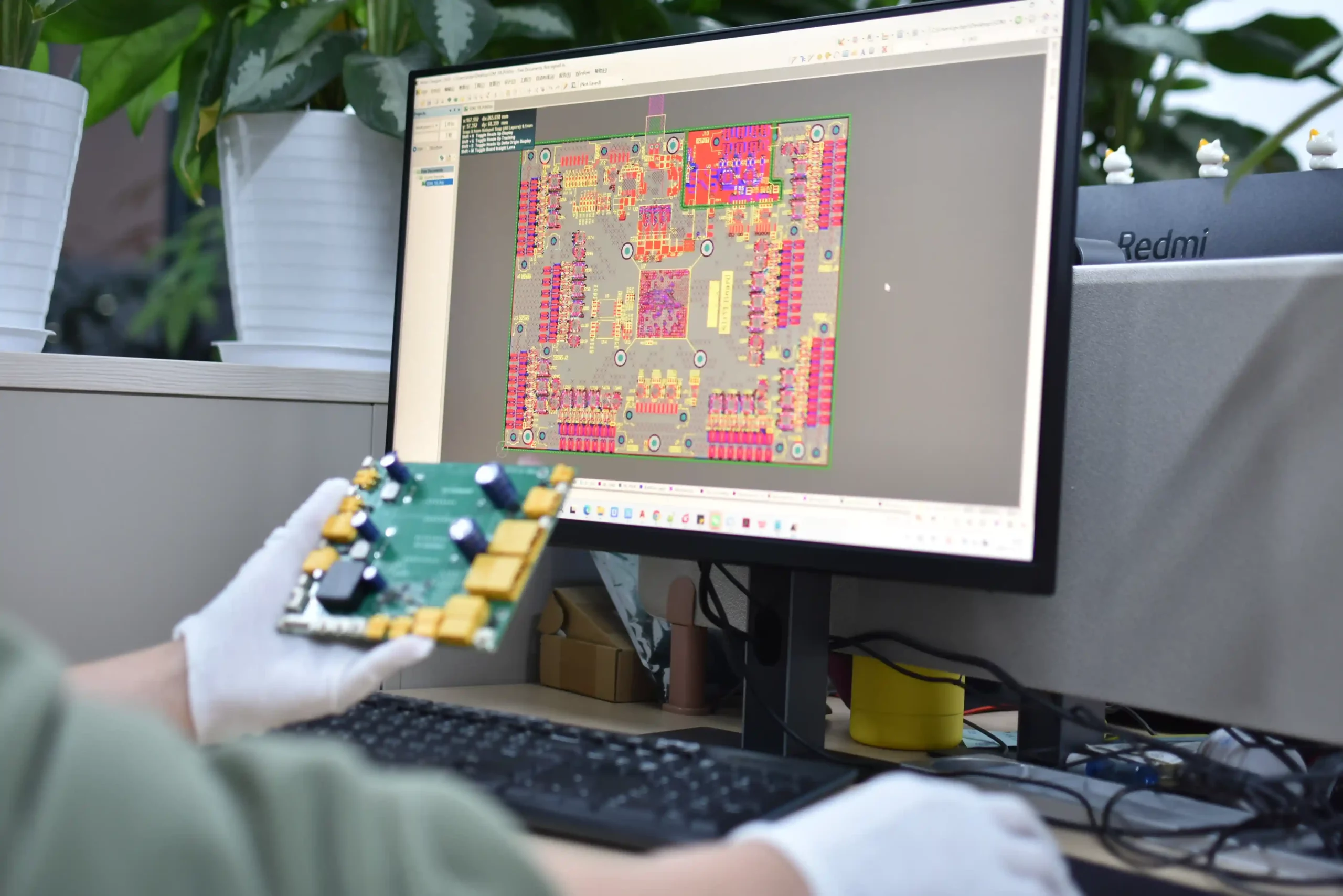
What Does a One-Stop PCB Manufacturer Actually Do?
A real one-stop PCB supplier does more than produce bare circuit boards. It connects the main stages of the electronics manufacturing process: PCB fabrication, BOM component sourcing, SMT stencil preparation, PCB assembly, inspection, and shipping. This matters because every handoff creates room for a mismatch. A footprint issue may not show up until assembly. A substitute part may affect soldering temperature or lead time. A design that looks acceptable in CAD may need panelization or spacing changes before mass production.
UMEC’s “More Than PCB” approach addresses the practical needs of overseas buyers. UMEC supports PCB manufacturing, PCBA assembly, component procurement, stencil production, and PCB design. In many companies abroad, there is no large supply chain department or production planning. So all board-level and assembly-level questions can be handled by a single engineering channel at UMEC.
How Does One-Stop PCB Manufacturing Reduce Cost, Time, and Supply Risk?
The lowest price PCB fabrication quote may not be the lowest price for your entire project. Saving a few cents per board in the fabrication quote may cost you days of additional time in added component delivery time, in reworking a solder joint, in re-designing a board to fix some other problem, or in having assembled boards shipped from another vendor. In prototype PCB assembly and in low-volume PCB production, your time is likely to be more expensive than the cost of the PCBs.
A one-stop process streamlines the process by consolidating BOM review, component sourcing for PCB assembly, PCB fabrication, and assembly planning into a single production schedule. UMEC supports full turnkey and partial consignment assembly, so buyers can either let the supplier source the BOM or provide selected key components, with UMEC handling the rest. This flexibility is useful when a customer has approved chips, locked-supply agreements, or sensitive components that must remain under internal control.
One quotation, one production plan, one shipment, and one technical team for buyers searching for turnkey PCB assembly services in China. This structure makes it easier to control delivery dates and avoid the typical communication gaps.
What PCB Fabrication Capabilities Should B2B Buyers Check?
When choosing a PCB fabrication supplier in China for your project, ensure the supplier supports both your current design and the future production version. For example, a two-layer prototype today could be a multilayer PCB with controlled impedance, smaller vias, more copper, and higher thermal dissipation in the future. Changing suppliers after you have completed the validation process introduces new risks.
UMEC’s PCB product lines include Double-Sided PCBs, Multilayer PCBs, HDI PCBs, Flexible PCBs, Rigid-Flex PCBs, RF PCBs, Heavy-Copper PCBs, Metal Substrate Boards, and Ceramic PCBs. Double-sided PCBs, Multilayer PCBs, and HDI PCBs are typically used for small-form-factor products that require high-density interconnects and fine-pitch wiring. Rigid-Flex PCBs are used to reduce the number of connectors in medical, aerospace, and wearable applications. Heavy Copper PCBs are used in power supplies, BMS systems, DC-to-DC chargers, and industrial control drives. RF and high-frequency PCBs are used for Radar, Wireless communication modules, Telecommunication equipment, and other applications where signal loss and impedance accuracy are critical.
For B2B buyers, a supplier’s ability to support different production volumes is very important. It takes time to qualify a new supplier, so having a supplier that can support prototype PCB fabrication, small-batch PCB assembly, and medium-volume PCBA production helps keep the product history within a single manufacturing system.
Why Is Component Sourcing Critical for PCB Assembly?
Many assembly delays start with the BOM, not the PCB. A resistor package may be wrong. A connector may have a long lead time. A chip may be out of stock or available only from uncertain channels. These problems can stop production even when the boards are ready.
As UMEC provides turnkey PCB assembly service with components, the BOM review should be conducted earlier in the process. The buyer provides the BOM, Gerber files, pick-and-place file, assembly drawings, etc., prior to a quotation being provided. A reliable PCB assembly manufacturer will verify part numbers, package sizes, polarity markings, lifecycle status, and potential alternative parts before commencing procurement.
UMEC’s one-stop BOM sourcing is ideal for buyers. By sourcing components for the buyer and fabricating and assembling the PCB into a PCBA, UMEC makes it easier for the buyer to source components. This is because waiting for missing parts on completed boards is a major problem for buyers. The More Than PCB approach to electronics manufacturing is for the R&D team that needs engineering support, as well as for simple transactions.
What PCB Assembly Services Does UMEC Provide?
PCB assembly turns a bare printed circuit board into a functional electronic assembly. For buyers comparing a PCBA manufacturer in China, the required services usually include SMT assembly, DIP or through-hole assembly, mixed assembly, BGA placement, soldering, inspection, and testing.
UMEC supports SMT and DIP assembly for prototypes, small batches, medium batches, and larger production runs. Its assembly resources include SMT production lines, solder paste printing, reflow soldering, wave soldering, AOI, 3D SPI, 3D X-ray, first-article inspection, BGA rework, and conformal coating. For dense boards with fine-pitch packages, these controls are important. A BGA solder joint cannot be fully checked by visual inspection alone, so X-ray inspection becomes a practical safeguard.
For procurement teams, it is necessary to assess a supplier’s assembly capability alongside its PCB capability. A supplier that can produce boards may not necessarily be able to handle fine-pitch components, double-sided SMT, or functional testing.
How Does UMEC Control PCB and PCBA Quality?
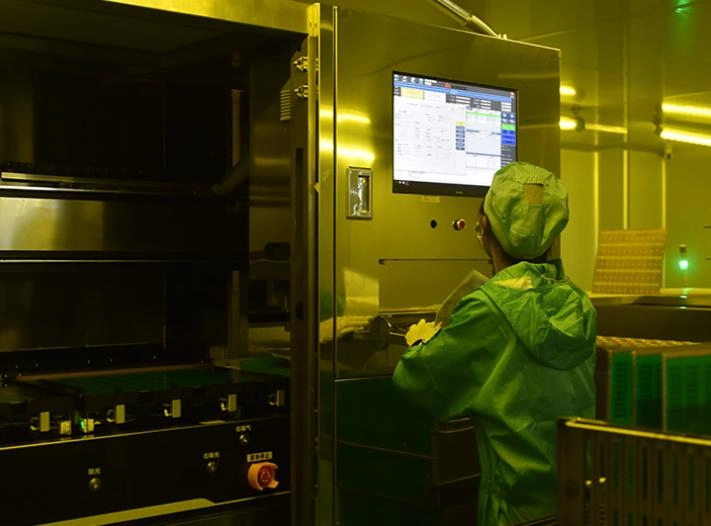
Quality control is not just an aspect of production. It begins with checking materials, reviewing Gerber files, cross-checking the BOM, verifying copper thickness, drilling accuracy, solder mask registration, surface finish, and the final electrical test. Especially in industrial control, automotive electronics, medical devices, AI hardware, robotics, as well as in telecoms applications, a small error can cause a board to fail in the field, result in additional warranty costs, or even cause a product to miss its market launch.
UMEC follows recognized quality systems and fabrication standards, including ISO 9001, ISO 13485, IATF 16949, IPC-A-600, and IPC-A-610. The company’s inspection methods include AOI, X-ray or AXI, electrical testing, ICT, FCT, visual inspection, microsection analysis, thermal shock, solderability testing, ionic contamination testing, and impedance control checks where required.
This quality framework also supports the purchase strategy of “small batch, big quality” for the first order, which consists of a few prototype units. The corresponding production discipline is adapted to future repeat orders of the same type.
Conclusion
A one-stop PCB manufacturer is most valuable to electronics R&D teams and purchasing departments when they need more than just a bare PCB. In such cases, the stronger decision would be to choose the supplier that can fabricate the PCB, source the components, assemble the PCB into a complete product, inspect it for quality, and ship it. UMEC offers its clients factory-direct communication, broad PCB product offerings, BOM support, PCBA assembly, and quality production for customers transitioning from prototype to low- to medium-volume production. Requesting a PCB fabrication and assembly quote for a new project is often the fastest way to get a handle on cost, lead time, and manufacturability before the schedule becomes too tight to alter.
FAQs
Q1: How do I choose a one-stop PCB manufacturer in China for a prototype project?
A: First, check UMEC’s ability to review Gerber files, find parts, build your board, and test finished PCBA’s. For prototype PCBs, fast communication is as important as price because you’ll have time to ask design questions before placing a production order. For prototype PCB assembly, small production runs of fabricated PCBs, and projects that require engineering to move towards production, UMEC is a good supplier.
Q2: What files do I need for a turnkey PCB assembly quote?
A: A turnkey PCB assembly quote typically requires Gerber files, a BOM, a pick-and-place file, an assembly drawing, quantity, information about the PCBs, information about any testing required, and a shipping destination. It’s also wise to advise at the quote stage of any components the customer intends to supply so that the supplier can plan for any required partial-consignment assembly.
Q3: Why is my PCB assembly project delayed after the boards are finished?
A: Delays can occur due to missing components, incorrect BOM data, missing parts, ambiguous polarity markings, and last-minute design changes. Using a one-stop PCB manufacturer in China can help mitigate risks by having them review your BOM and PCB design files before PCB and assembly production.
Q4: Can one supplier handle PCB fabrication, component sourcing, and PCB assembly?
A: Yes. A full-service supplier can manage PCB fabrication, component sourcing for PCB assembly, SMT assembly, DIP assembly, inspection, and shipping. UMEC provides this one-stop model for buyers that want fewer supplier handoffs and clearer project control.
Q5: Is one-stop PCB assembly better for low-volume production?
A: One-stop PCB assembly is best for low-volume production, as small runs have little room for error with potential delays and rework. All of the PCB manufacturing, BOM sourcing, PCB assembly, and PCB testing are managed by one service provider, which greatly reduces the coordination time to get ready for a repeat order.