
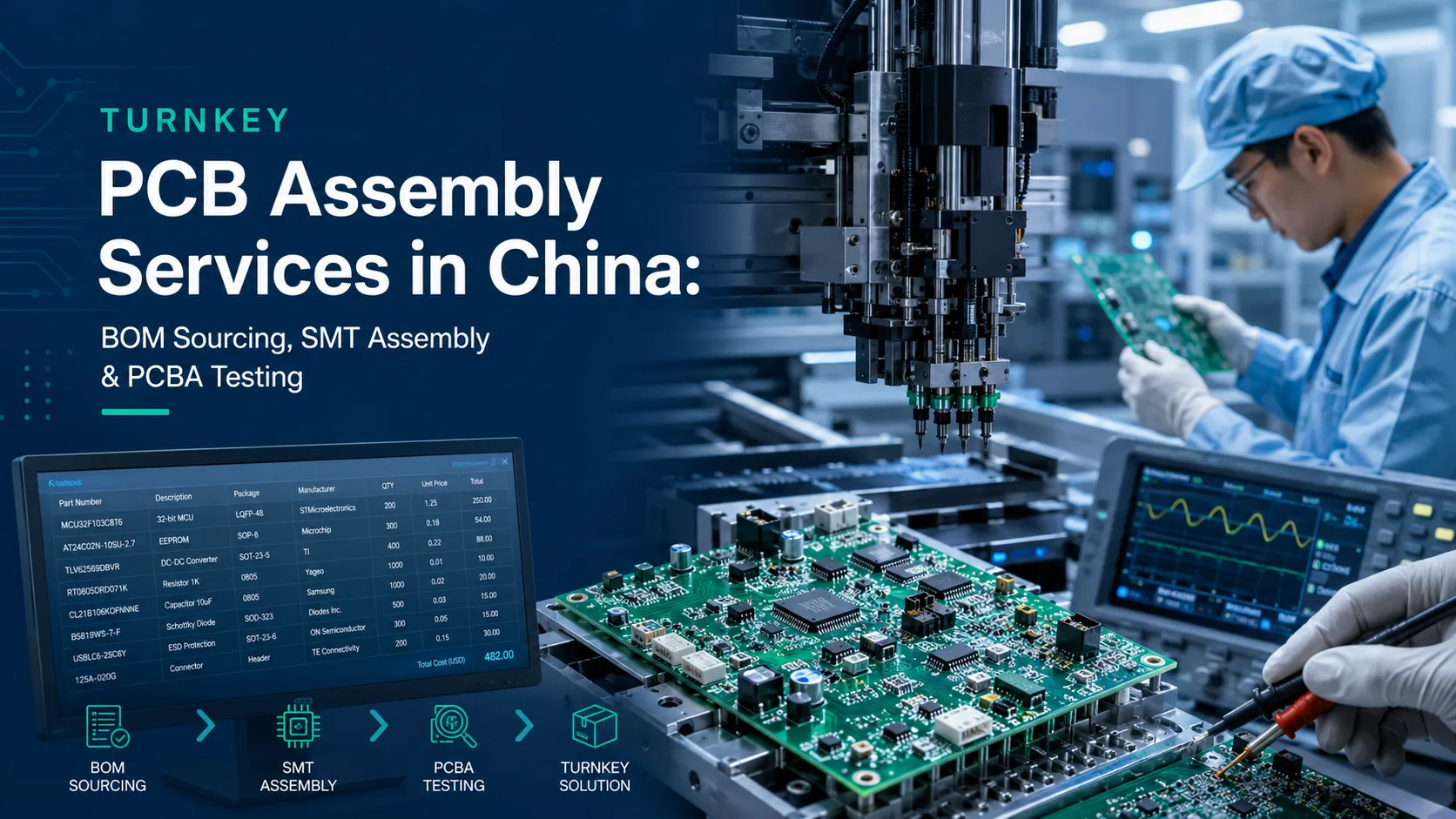
OEM buyers search for turnkey PCB assembly services in China when a project needs more than bare PCB fabrication. The real need is usually a complete workflow: BOM sourcing, component procurement, SMT assembly, DIP assembly, inspection, PCBA testing, and delivery. For engineering teams, equipment manufacturers, repair teams, and purchasing managers, the main question is not “What is PCBA?” It is whether one supplier can reduce sourcing delays, file errors, assembly risks, and communication gaps before production starts. Read more to tell you how UMEC offers those services.
What Is Included in Turnkey PCB Assembly Services?
Turnkey PCB assembly services usually combine PCB fabrication, component sourcing, PCB assembly, inspection, testing, and shipment. Buyers should confirm the exact service scope before sending an RFQ, especially when the project involves industrial electronics, IoT devices, control boards, communication modules, or replacement PCBAs.
For projects that require SMT, through-hole assembly, mixed assembly, inspection, and testing, the supplier’s PCB assembly service should be reviewed before quotation.
PCB Fabrication
PCB fabrication is the first step. The supplier should review Gerber files, board thickness, copper weight, surface finish, solder mask, material requirements, and quantity. These details affect both assembly feasibility and quotation accuracy.
BOM Sourcing and Component Procurement
BOM sourcing is where many turnkey PCBA projects succeed or fail. A complete BOM should include manufacturer part numbers, designators, quantity, package, approved alternatives, and no-substitute notes. Missing or unclear component data may delay pricing, purchasing, and production.
SMT, DIP, and Mixed Assembly
SMT assembly includes surface-mount parts such as ICs, passives, QFNs, BGAs, and fine-pitch components. DIP or through-hole assembly is still common for connectors, terminals, relays, switches, and power parts. Many OEM boards require mixed assembly, so buyers should confirm whether the supplier can handle both processes.
Inspection, Testing, and Delivery
Inspection and testing help reduce risks such as solder bridges, missing parts, reversed polarity, open circuits, or functional failure. Depending on the project, testing may include AOI, X-ray, ICT, flying probe, or functional testing.
Why BOM Sourcing Often Decides PCBA Cost, Lead Time, and Quality
BOM problems often create more delay than PCB fabrication. A board can be manufacturable, but production can still be blocked by obsolete parts, long-lead components, package mismatch, or unapproved substitutes. A supplier with BOM sourcing and component procurement support can help buyers identify these risks before production.
Missing or Incomplete Manufacturer Part Numbers
A BOM that only says “10k resistor” or “MCU” is not enough for a reliable PCB assembly quote. Exact MPNs or approved alternatives help reduce quotation errors and make supplier comparison more meaningful.
Package and Footprint Mismatch
A component may have the correct electrical value, but the wrong package or footprint. This can cause SMT placement problems, soldering defects, or rework. Package details should be checked against the PCB footprint, BOM, and pick-and-place file.
Obsolete, Long-Lead or Single-Source Components
Obsolete or long-lead components can increase cost and delay delivery. Single-source components may also create repeat-order risk. Buyers should ask whether alternatives can be reviewed before purchasing begins.
Approved Alternatives and No-Substitute Parts
Some components affect firmware, signal integrity, certification, or safety requirements. These should be marked as no-substitute parts. For standard components, approved alternatives may help reduce sourcing delays.
How a Supplier Should Review Your BOM Before Production
A practical BOM review should check part numbers, package consistency, quantities, availability, substitute rules, and possible sourcing risks. This helps buyers understand PCBA costs, lead times, and production risks before placing an order.
Full Turnkey vs Partial Turnkey PCB Assembly: Which One Should You Choose?
Different projects require different purchasing models. The right choice depends on component control, sourcing risk, project maturity, and the need for repeat production.
Choose Full Turnkey When You Want One Supplier to Handle Everything
Full turnkey PCB assembly is suitable when the buyer wants one supplier to manage PCB fabrication, components, SMT/DIP assembly, inspection, testing, and shipment. It is useful for OEM buyers, R&D teams, and companies without a local sourcing team in China.
Choose Partial Turnkey When You Have Critical or Approved Components
Partial turnkey assembly is suitable when the buyer supplies key ICs, programmed parts, certified modules, or expensive components, while the supplier sources the remaining BOM and completes assembly.
Choose Consigned Assembly When You Already Control the Whole BOM
Consigned assembly works when the buyer provides all components and only needs them assembled and tested. It is often used for mature products or repeat orders with an established supply chain.
Decision Table: Full Turnkey vs Partial Turnkey vs Consigned Assembly
| Project Situation | Best Model |
| New build without component suppliers | Full turnkey |
| Buyer controls key ICs or certified parts | Partial turnkey |
| Mature product with existing stock | Consigned assembly |
| Need fewer supplier handoffs | Full or partial turnkey |
What Files Are Needed for a Turnkey PCB Assembly Quote?
A complete RFQ package helps the supplier quote faster and identify production risks earlier.
Gerber Files and PCB Specifications
Send Gerber files with board thickness, copper weight, surface finish, material requirements, solder mask, quantity, and any special PCB requirements.
BOM with MPNs, Quantity, and Substitute Rules
The BOM should include MPNs, designators, package, quantity per board, approved alternatives, and no-substitute rules.
Pick-and-Place / Centroid File
The pick-and-place file provides component position, rotation, and side-of-board information for SMT assembly.
Assembly Drawing and Polarity Notes
Assembly drawings help clarify connector direction, component polarity, mechanical constraints, and special soldering notes.
Testing Requirements and Shipping Information
Buyers should specify AOI, X-ray, ICT, functional testing, firmware loading, target quantity, destination, and packaging requirements when relevant.
SMT Assembly, DIP Assembly, and Mixed Assembly Capabilities to Check
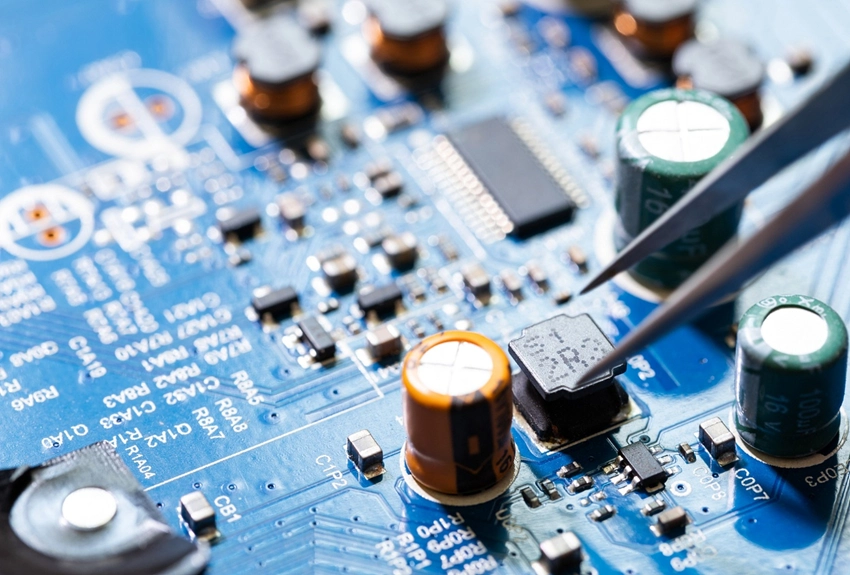
Assembly capability should match the board design, not only the requested quantity or target price.
SMT Assembly for High-Density Components
For dense boards, buyers should check whether the supplier can handle fine-pitch ICs, QFN, BGA, small passives, and double-sided SMT assembly.
DIP / Through-Hole Assembly for Connectors and Power Components
Industrial control boards, power boards, and equipment PCBAs often include terminals, connectors, relays, and power components that require through-hole assembly.
Mixed Assembly for Industrial and OEM Boards
Many B2B boards combine SMT logic components with through-hole mechanical or power parts. The supplier should understand the assembly sequence and inspection needs.
What Assembly Capability Should OEM Buyers Ask Before Ordering?
Useful questions include: Can the supplier handle BGA or QFN packages? Does the board require double-sided SMT? Are there tall or heavy components? Is a first article inspection needed before batch production?
What PCBA Testing Is Needed Before Delivery?
Testing should match the board’s risk level, application, and production quantity.
AOI and SPI for Soldering and Placement Defects
AOI and SPI can help identify visible placement and soldering issues before boards move further in the production process.
X-ray Inspection for BGA, QFN, and Hidden Solder Joints
X-ray inspection may be needed when solder joints are hidden under packages such as BGA or some QFN components.
ICT or Flying Probe for Electrical Continuity
ICT or flying-probe testing can help detect shorts, opens, and other basic electrical issues. Flying probe may suit prototypes or small batches; ICT may suit repeat production when fixtures are justified.
Functional Testing for Finished PCBA
Functional testing verifies that the PCBA functions in the intended application. Buyers may need to provide firmware, test steps, fixtures, cables, or acceptance criteria.
Testing Selection Table for OEM Buyers
| Board Situation | Test Consideration |
| Standard SMT board | AOI |
| BGA/QFN board | X-ray if needed |
| Prototype or small batch | Flying probe or functional test |
| Industrial control board | Electrical + functional test |
How to Choose a Turnkey PCB Assembly Manufacturer in China
Buyers should evaluate more than the unit price. A qualified supplier should support file review, BOM review, component sourcing, assembly, inspection, testing, and clear RFQ communication.
Check Whether the Supplier Handles PCB, Components, Assembly, and Testing
One coordinated workflow can reduce responsibility gaps between PCB fabrication, component sourcing, and assembly. Buyers comparing this model can also review how a one-stop PCB manufacturing partner in China connects PCB fabrication, component sourcing, and PCB assembly.
Check BOM Review and Component Sourcing Capability
The supplier should be able to flag missing MPNs, unavailable parts, package mismatches, and substitute risks before purchasing.
Check SMT/DIP Assembly and Inspection Capability
The supplier’s assembly process should fit the component package, board density, and application requirements.
Check Engineering Communication and RFQ Response
Clear communication helps reduce file revision cycles, quotation delays, and production misunderstandings.
Check Certifications, Quality Control, and Repeat Production Support
Any required certification, inspection record, or repeat production control should be verified against the project specification before ordering.
Why Work with UMEC for Turnkey PCB Assembly Projects in China?
Buyers need a supplier that can connect design files, sourcing decisions, assembly requirements, and test expectations. UMEC’s confirmed service chain covers PCB fabrication, component sourcing, PCB assembly, and PCBA testing for custom electronics projects.
PCB Fabrication, Component Sourcing, and PCBA Testing in One Workflow
UMEC supports buyers who need PCB fabrication, BOM sourcing, SMT/DIP assembly, and PCBA testing coordinated within a single workflow. This is relevant for OEM projects, equipment manufacturers, industrial electronics buyers, and engineering teams.
Support for Custom PCB Types Through the PCB Matrix
Different PCBA projects may require different PCB types. Compact products may use HDI. Power boards may need heavier copper. Communication modules may involve RF-related requirements. Buyers can use UMEC’s PCB product matrix to review custom PCB categories before assembly.
RFQ Checklist: What to Send Before Asking for a Quote
Prepare Gerber files, BOM, pick-and-place data, assembly drawings, testing requirements, target quantity, application details, and shipping needs.
Request a Turnkey PCB Assembly Quote from UMEC
For replacement, repair, or production projects, buyers can also provide samples, failure photos, operating conditions, and target order quantity to help clarify the RFQ.
Visit UMEC to request a turnkey PCB assembly quote, or send your Gerber files and BOM to get a response within 24 hours.
Conclusion
China Turnkey PCB Assembly Services are helpful for buyers who require PCB fabrication, BOM procurement, SMT assembly, DIP assembly, PCBA testing, and delivery in a single, end-to-end process. Before selecting a turnkey PCB assembly service provider, the buyer should confirm the BOM, component risk, assembly capabilities, test requirements, and the RFQ process.
When a project involves PCB fabrication, component procurement, assembly, and testing, UMEC will analyze the Gerber file, BOM, Pick&Place file, assembly drawings, target quantities, application requirements, and test requirements before issuing the quotation.
FAQs
Q1: What is usually involved in turnkey PCB assembly services?
A: PCB assembly services often consist of PCB fabrication, procurement of components, assembly using SMT/DIP technologies, inspection, testing of assembled boards, and delivery of the products.
Q2: What is the distinction between full turnkey and partial turnkey PCB assembly?
A: In a full turnkey, the supplier is responsible for the procurement of the board, components, assembly, and testing. In a partial turnkey arrangement, the customer supplies specific components, and the supplier purchases the remaining required components.
Q3: What documents are required for a PCB assembly quote?
A: PCB assembly requires Gerber files, BOM, pick and place file, assembly drawing, testing, quantity, and shipping documents.
Q4: How does BOM sourcing influence PCBA lead time?
A: The lead time is influenced by the fact that some components may not be available, be obsolescent, have a long lead time, or their description may be vague.
Q5: Is turnkey PCB assembly appropriate for OEM industrial electronics?
A: Yes, in case it is required to fabricate PCB, procure components, assemble, and test PCB assemblies. Requirements should be verified.